How Much Can You Save with Ontario Insulation Rebates in 2026?
A plain-language breakdown of the Ontario insulation rebates available in 2026, how much homeowners typically save on attic upgrades, and how PolarCore's $0-upfront model…
Read Article →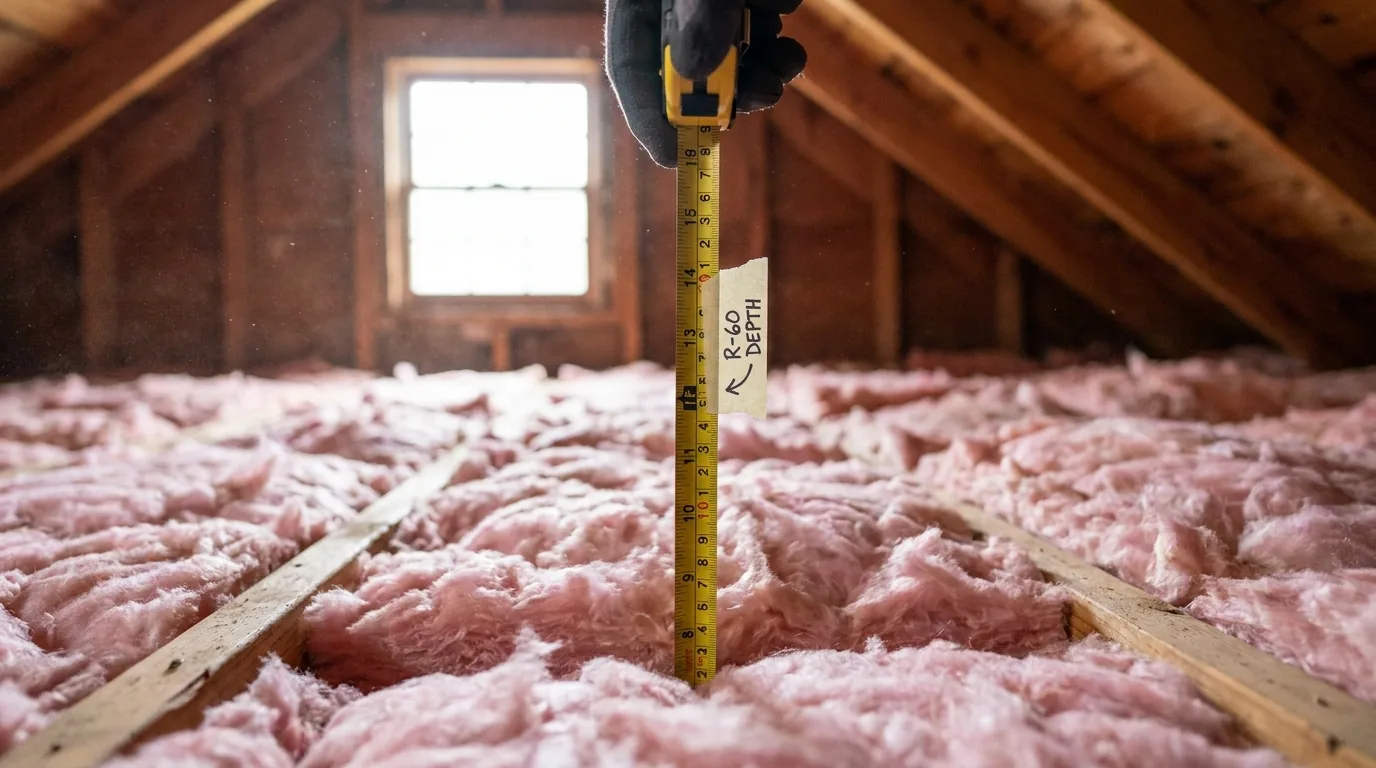
If you have shopped for attic insulation in Ontario, you have run into the letter “R” attached to a number: R-40, R-50, R-60. It shows up on batt packaging, in rebate paperwork, and in every energy audit. But what does R-value actually measure, and why does R-60 keep coming up as the target for attics? Here is a plain-language explanation, along with what it means in practical terms for your home and your heating bills.
R-value is a measure of thermal resistance, which is the ability of a material to slow the flow of heat. The higher the R-value, the better the material resists heat moving through it. In winter, that means keeping the warmth you paid for inside your living space instead of letting it escape through the ceiling. In summer, it works in reverse, slowing heat from a hot attic before it reaches your rooms.
A few things are worth understanding about how R-value behaves:
Ontario sits in a cold climate zone, and attics are where a home loses the most heat because warm air rises. Current Ontario Building Code energy-efficiency requirements call for attic insulation of roughly R-60 for most new homes, up from the R-50 that was common in older construction and the R-20 to R-40 you often find in homes built decades ago.
R-60 is also the level most utility and government programs point to when they encourage homeowners to upgrade. It reflects a balance point: enough insulation to make a real difference to comfort and energy use in an Ontario winter, without over-building past the point of diminishing returns.
If your attic was insulated before the 1990s, there is a good chance it sits well below today’s R-60 target and is a strong candidate for a top-up.
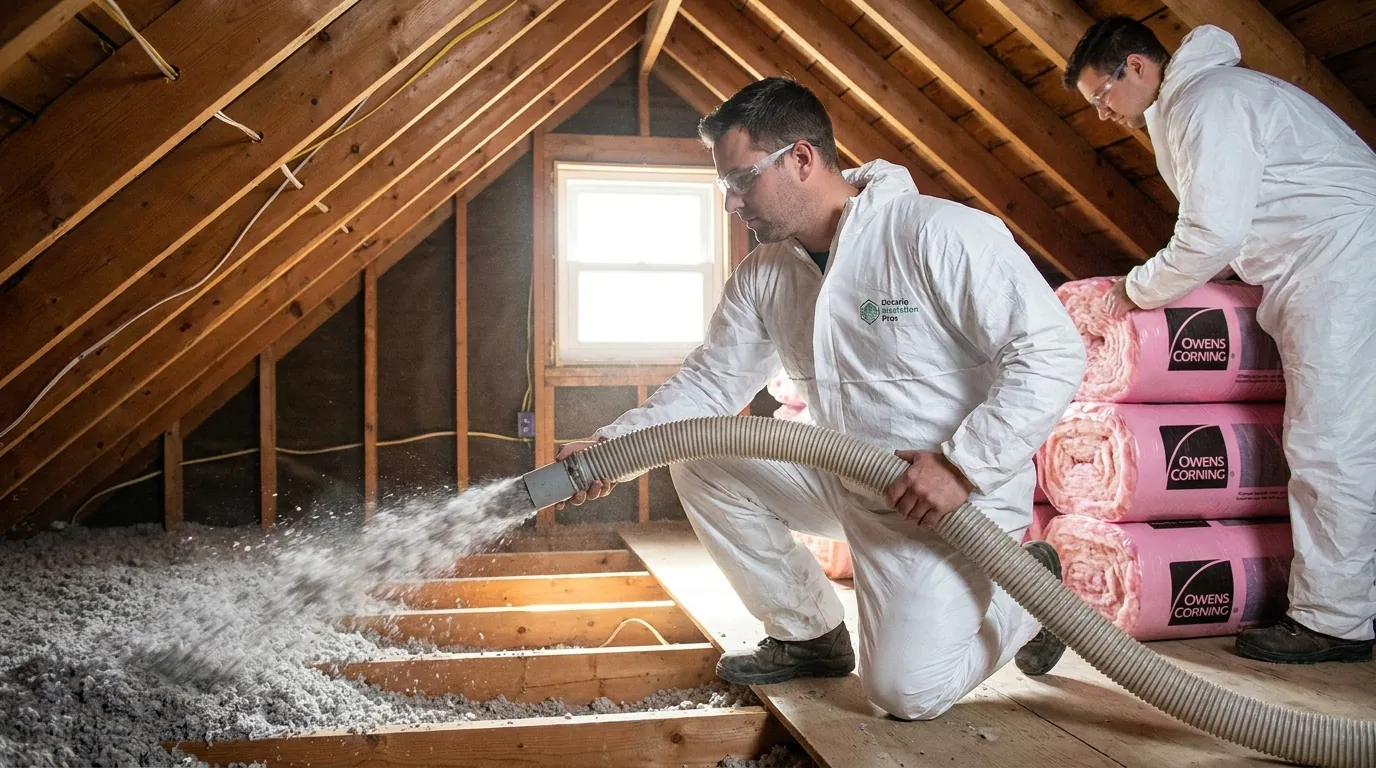
R-value depends on both the material and how thick it is. Two common approaches reach R-60 in different ways:
Blown-in fibreglass or cellulose is the most common choice for attic floors because it settles into every cavity, around joists, and into awkward corners that batts cannot fill neatly. To reach R-60, you are typically looking at roughly 16 to 20 inches of depth, depending on the specific product and its rated R-value per inch. Because it is blown in loose, it also covers existing insulation without disturbing it, which makes it ideal for topping up.
Fibreglass batts have a fixed R-value per thickness. Reaching R-60 with batts usually means layering, for example an R-40 layer crossed with an additional R-20 layer laid perpendicular to reduce gaps. Batts work well in open, regularly spaced attics but are harder to fit tightly around obstructions, so many Ontario attics end up better served by blown-in coverage.
As an Owens Corning authorized installer of PINK NEXT GEN® materials, we work with both and recommend the approach that suits your attic’s layout and existing insulation. You can see how we handle these upgrades on our attic insulation service page.
An under-insulated attic is one of the most cost-effective things to fix in an Ontario home. Because R-value stacks, adding insulation on top of what you already have brings the whole assembly up to R-60 without tearing anything out. The result is a more even indoor temperature, less strain on your furnace and air conditioner, and fewer ice dams in winter caused by heat escaping through the roof.
There is also a financial side. PolarCore Systems is certified for the Ontario Home Energy Rebate Program, and attic insulation top-ups are among the upgrades that commonly qualify. We handle all of the rebate paperwork for you, and for most homes the work is $0 upfront. Every project starts with a free assessment where we measure your existing R-value and tell you exactly what it would take to reach R-60. To understand how the rebate side works, our Ontario service overview is a good next read.
R-value is simply a measure of how well insulation holds heat in place, and R-60 is the level Ontario has settled on as the right target for attics. If your attic is shallower than about 16 inches, you are likely below that mark and leaving comfort and savings on the table. The fix is straightforward, it stacks on top of what you already have, and it often costs nothing upfront once rebates are applied.
Not sure where your attic stands? Book a free, no-obligation assessment and we will measure your current R-value, map out the top-up to R-60, and handle the rebate paperwork from start to finish. Book your free attic assessment online, or call us at (647) 740-9246 to get started.
Book a free assessment — we’ll calculate your rebate eligibility and handle every form. $0 upfront for most homes.

A plain-language breakdown of the Ontario insulation rebates available in 2026, how much homeowners typically save on attic upgrades, and how PolarCore's $0-upfront model…
Read Article →
From climbing heating bills to cold floors and attic moisture, here are seven clear signs your Ontario home is due for an insulation upgrade…
Read Article →
A balanced, Ontario-focused comparison of spray foam and fiberglass batt insulation — R-value, air sealing, cost, best use cases, and which one qualifies for…
Read Article →