How Much Can You Save with Ontario Insulation Rebates in 2026?
A plain-language breakdown of the Ontario insulation rebates available in 2026, how much homeowners typically save on attic upgrades, and how PolarCore's $0-upfront model…
Read Article →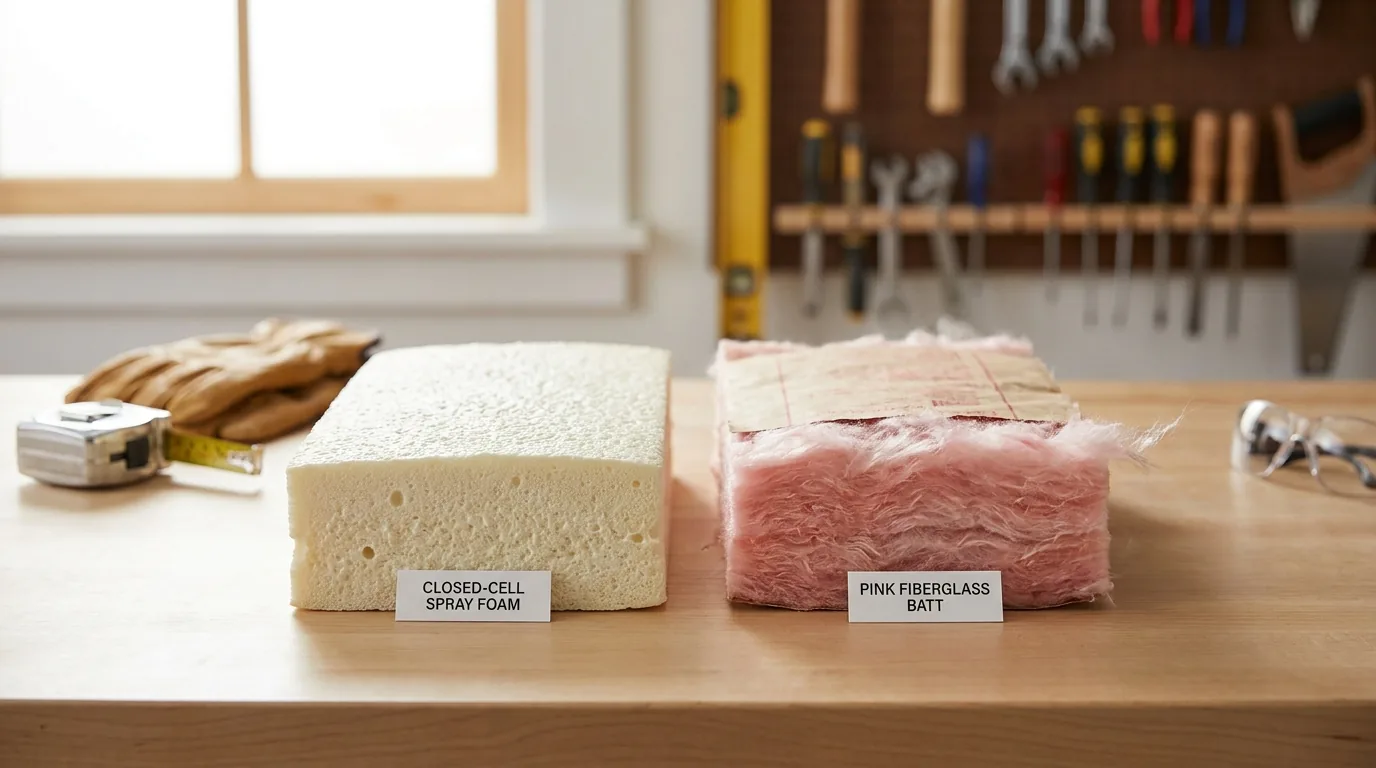
If you’re planning to upgrade your home’s insulation, two options come up again and again: spray foam and fiberglass batt. Both can dramatically improve comfort and cut your heating and cooling bills, but they work differently, cost differently, and suit different parts of the house. Here’s an honest, Ontario-focused comparison to help you decide.
Neither material is universally “better.” The right choice depends on where you’re insulating, your budget, and whether air leakage is part of the problem. In many Ontario homes, the smartest solution is actually a combination — spray foam where air sealing matters most, and fiberglass batt where it’s the more cost-effective fit.
R-value measures resistance to heat flow — higher is better. This is where the two materials differ most clearly.
If space is tight — think rim joists, cathedral ceilings, or narrow wall cavities — closed-cell spray foam’s high R-value per inch is a real advantage.
This is often more important than R-value alone. A large share of a home’s energy loss comes from air leaking through gaps, not just conducting through insulation.
Fiberglass batt resists heat flow, but air can still move around and through it. Spray foam expands to fill cracks and gaps, sealing air leaks as it insulates.
Closed-cell spray foam also acts as an air and vapour barrier, which is why it excels in basements, rim joists, and hard-to-seal areas. Fiberglass batt, on the other hand, needs a separate, well-installed air barrier to perform its best — and gaps or compression during installation can noticeably reduce its effectiveness.
Budget is usually where the two part ways.
The good news for Ontario homeowners: with available rebates and financing, most homes qualify for $0 upfront, which softens the cost difference considerably.
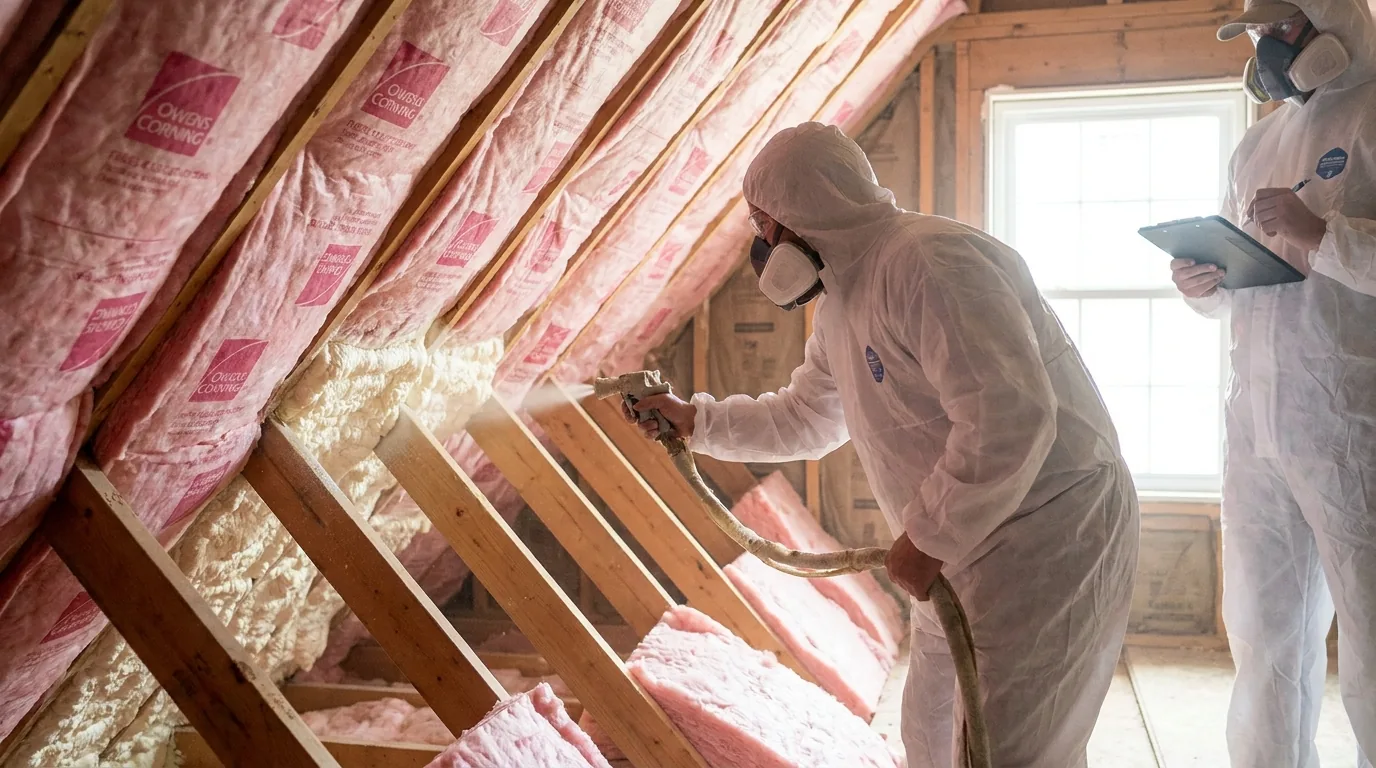
For many Ontario attics, a proper top-up of fiberglass or blown-in insulation to R-60 is the most economical upgrade. Our attic insulation service often uses Owens Corning PINK NEXT GEN® materials for exactly this reason.
If air leakage and moisture are your main concerns, our spray foam insulation service is usually the stronger fit.
Both spray foam and fiberglass batt insulation can qualify for support under the Ontario Home Energy Rebate Program, provided the work meets the program’s requirements and is documented properly. Rebates are typically tied to the improvement in your home’s energy performance — often confirmed through a pre- and post-upgrade energy assessment — rather than to one specific material.
PolarCore Systems is certified for the program and an Owens Corning authorized installer, and we handle all the rebate paperwork for you. That means you get the right product for each part of your home without worrying about missing paperwork or deadlines.
Choose fiberglass batt for open, accessible spaces where cost-effectiveness matters and a good air barrier already exists. Choose spray foam where air sealing, moisture control, or tight spaces demand more. And in plenty of Ontario homes, the best plan uses both — matched to each area’s needs.
The only way to know for certain is to have your home assessed. PolarCore Systems offers free assessments across Toronto, the GTA, and Ontario, and we’ll recommend the right approach for your home and budget — not a one-size-fits-all upsell. Book your free assessment online today, or call us at (647) 740-9246. With rebates handled and $0 upfront for most homes, a warmer, more efficient home is closer than you think.
Book a free assessment — we’ll calculate your rebate eligibility and handle every form. $0 upfront for most homes.

A plain-language breakdown of the Ontario insulation rebates available in 2026, how much homeowners typically save on attic upgrades, and how PolarCore's $0-upfront model…
Read Article →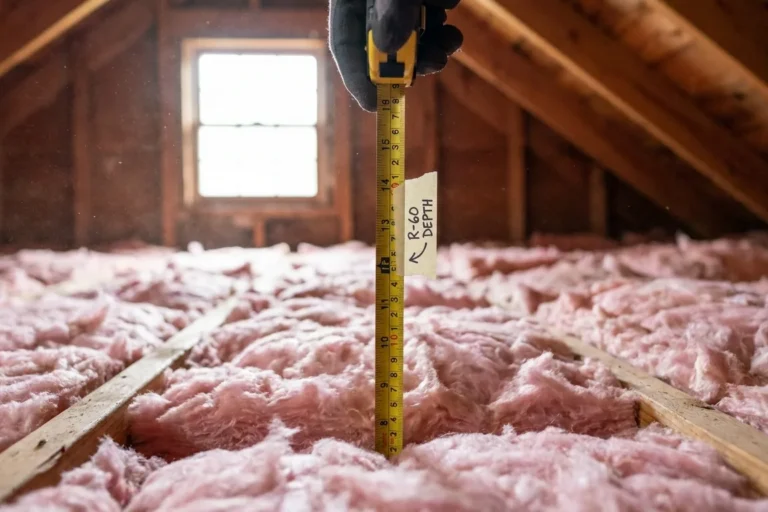
R-value measures how well insulation resists heat flow. Here's what Ontario's R-60 attic target means, how much depth it takes, and why topping up…
Read Article →
From climbing heating bills to cold floors and attic moisture, here are seven clear signs your Ontario home is due for an insulation upgrade…
Read Article →